Own product · SaaS for service businesses · 2025 - now
Rokó
Calendar, staff, clients and online booking for businesses that work by appointment.
- Role
- Founder & product developer: product, design, full stack build and infrastructure
- Status
- Live
- Stack
- Nuxt 4, Nuxt UI 4, Supabase, Tailwind CSS 4, TypeScript, Zod, Nodemailer, Coolify
In short.
The problem
A business that works by appointment usually runs its day on paper, the phone and chat messages, and someone has to remember who works when, which room is free, what a client had last time and which request still needs an answer. Booking platforms that take this over often charge a commission per booking or list the business next to its competitors.
What I built
I designed and built Rokó end to end: the product, the interface, the database and the servers. Every company gets its own space with locations, rooms, staff, services and clients, with the calendar at the centre and the requests from its own website in one list. The app runs in the browser on phone and desktop, in Serbian and English, on my own infrastructure.
Where it stands.
- In production
- Live at studio.roko.rs, with real companies and their data.
- Demo
- A public demo with sample data runs at demo.roko.rs.
- Commission
- 0% commission on bookings.
- Calendar
- The database refuses a second booking for the same staff member at the same time.
How it works.
Calendar
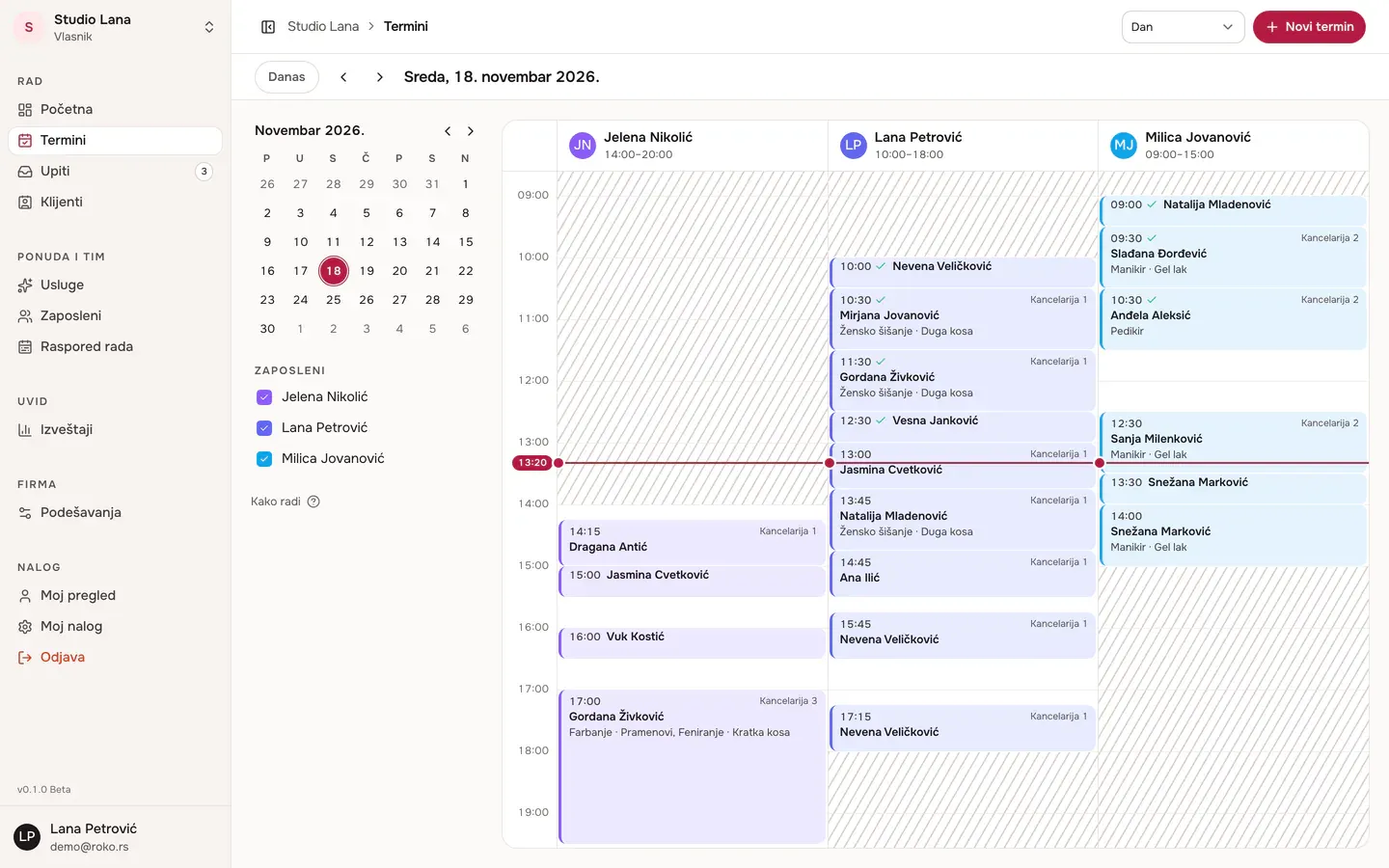
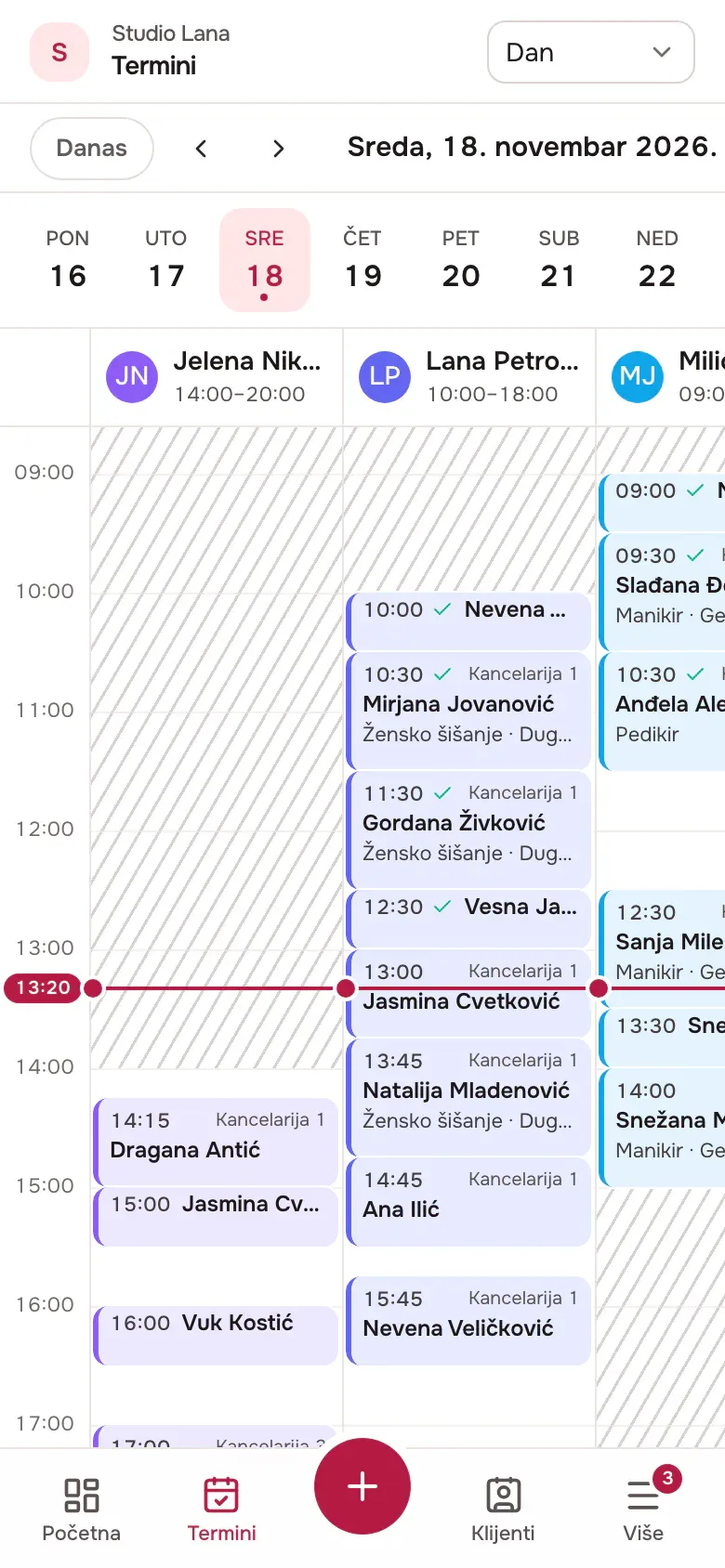
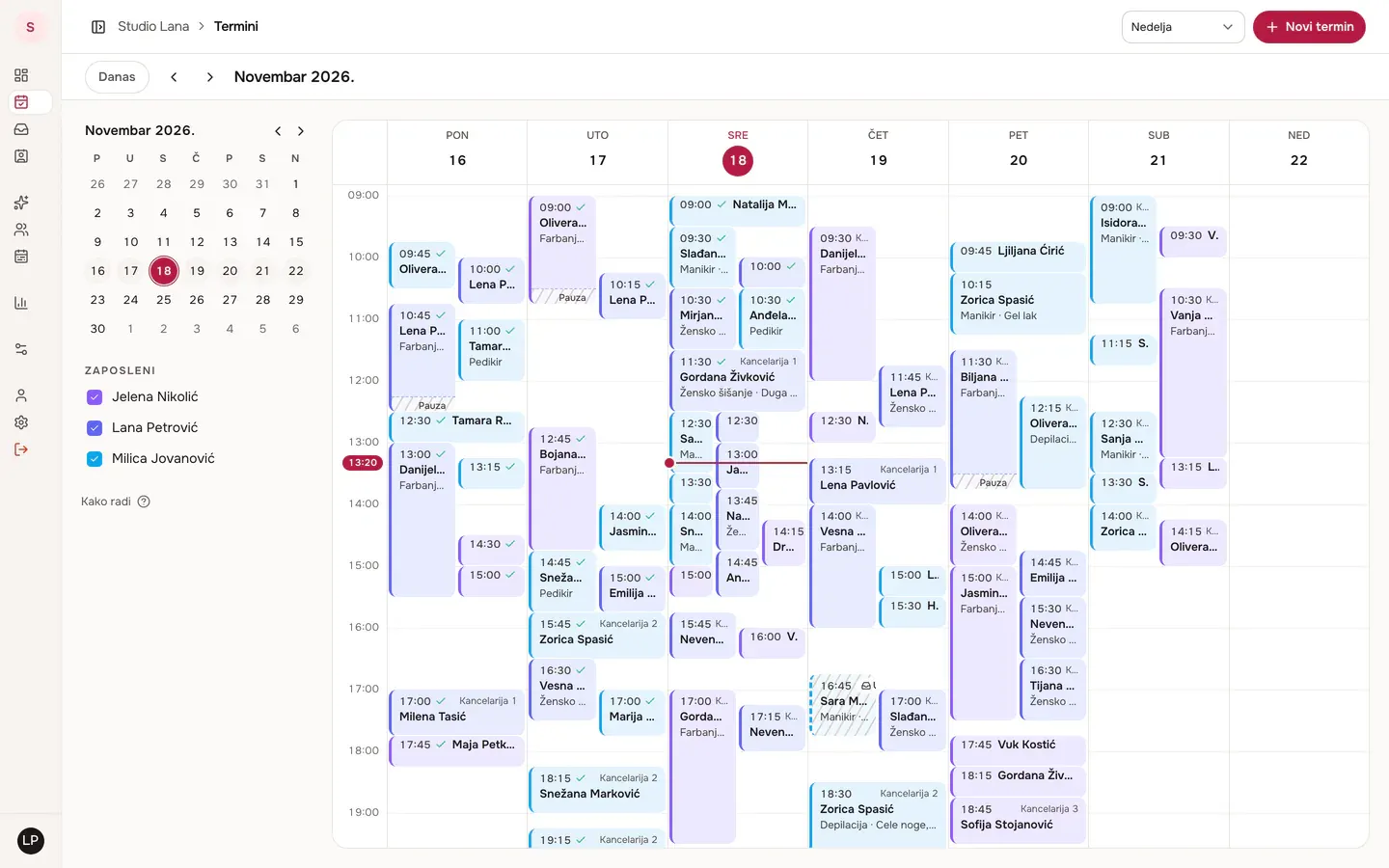
Day, week and month views, filtered by staff member, with a line for the current time and rooms on every booking. Two bookings in one room raise a warning, and a booking moves by dragging, with a long press on the phone.
Booking
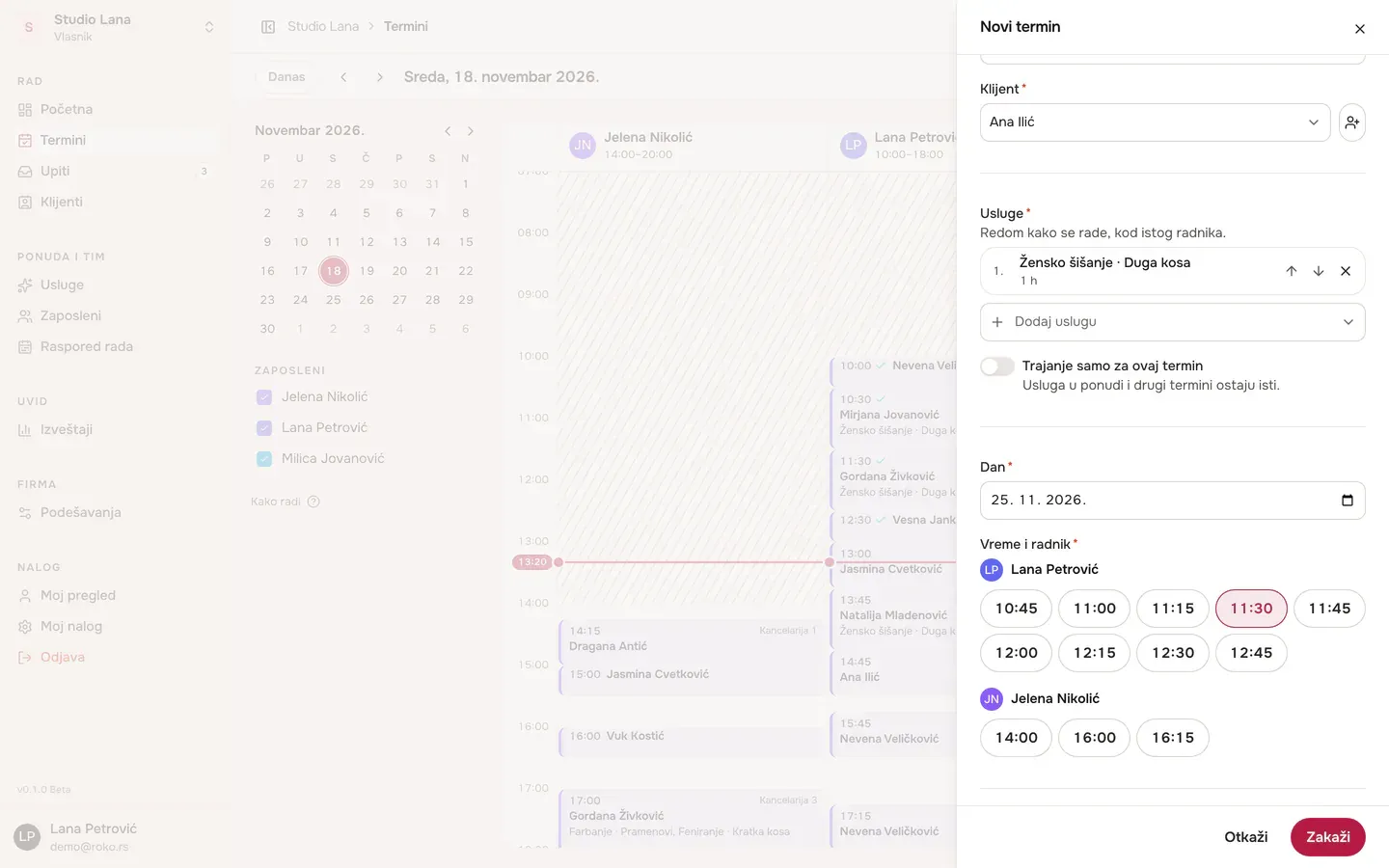
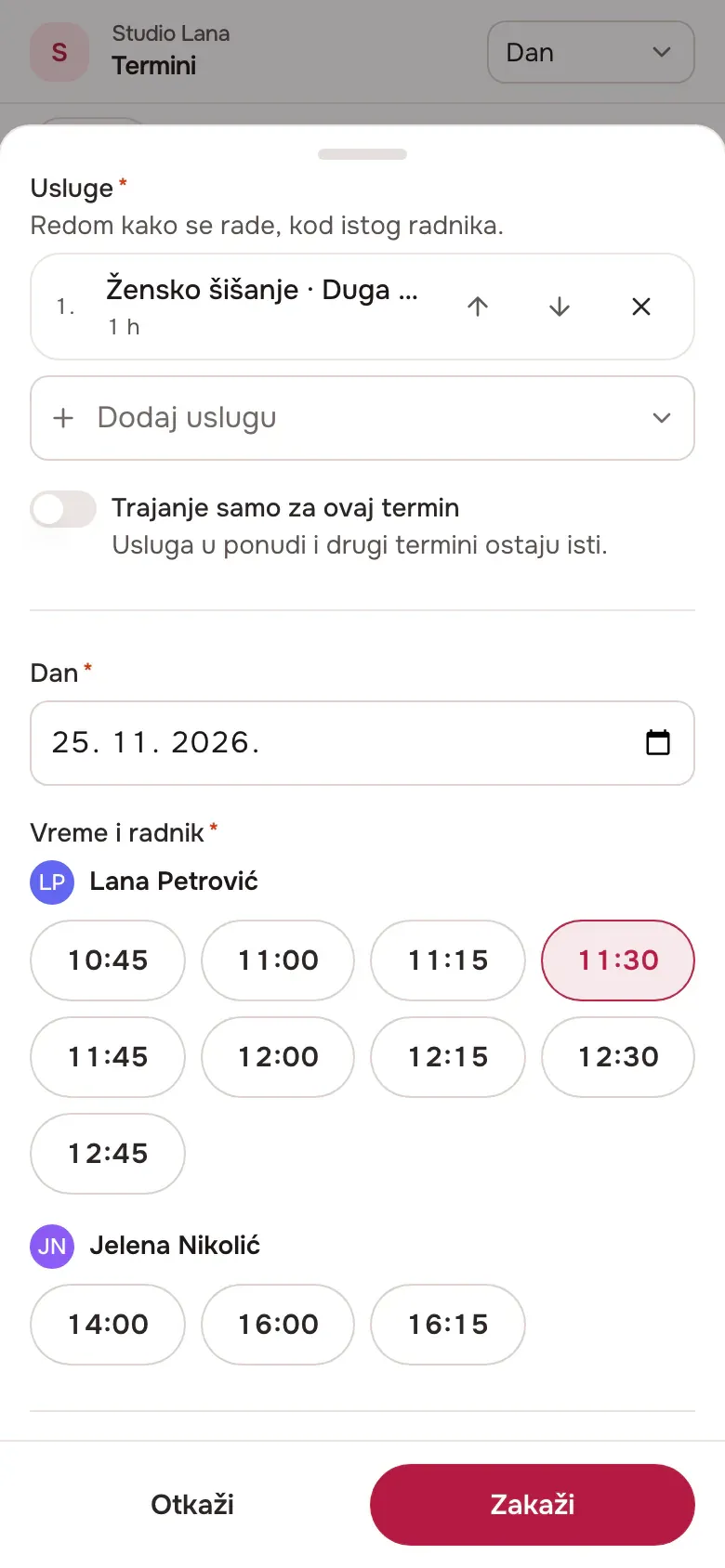
One visit can hold several services in sequence with the same staff member, and free start times are shown per staff member. The duration can change for a single booking while the price list stays the same, and clients get confirmation and reminder emails 2, 12, 24 or 48 hours ahead.
Online booking requests
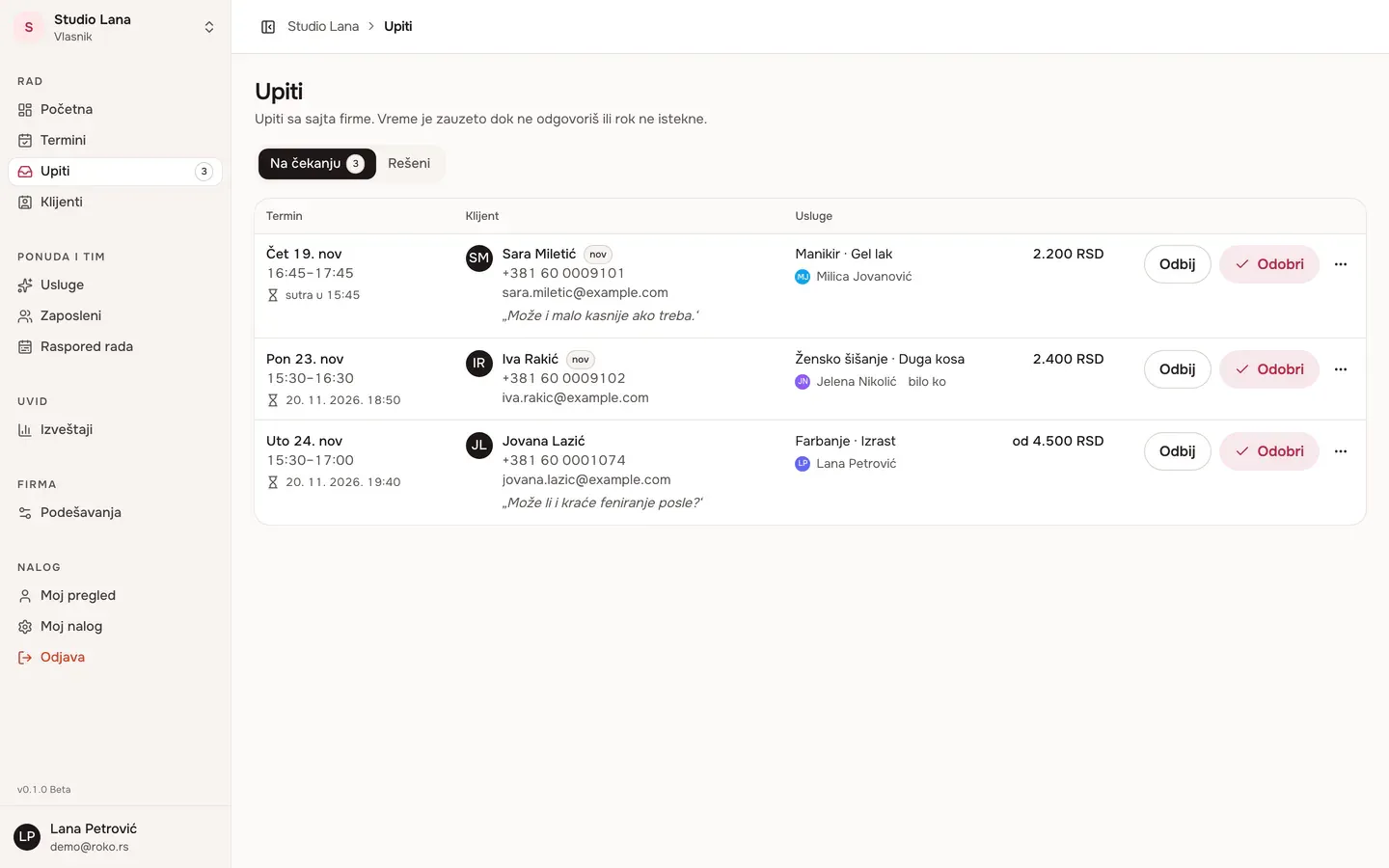
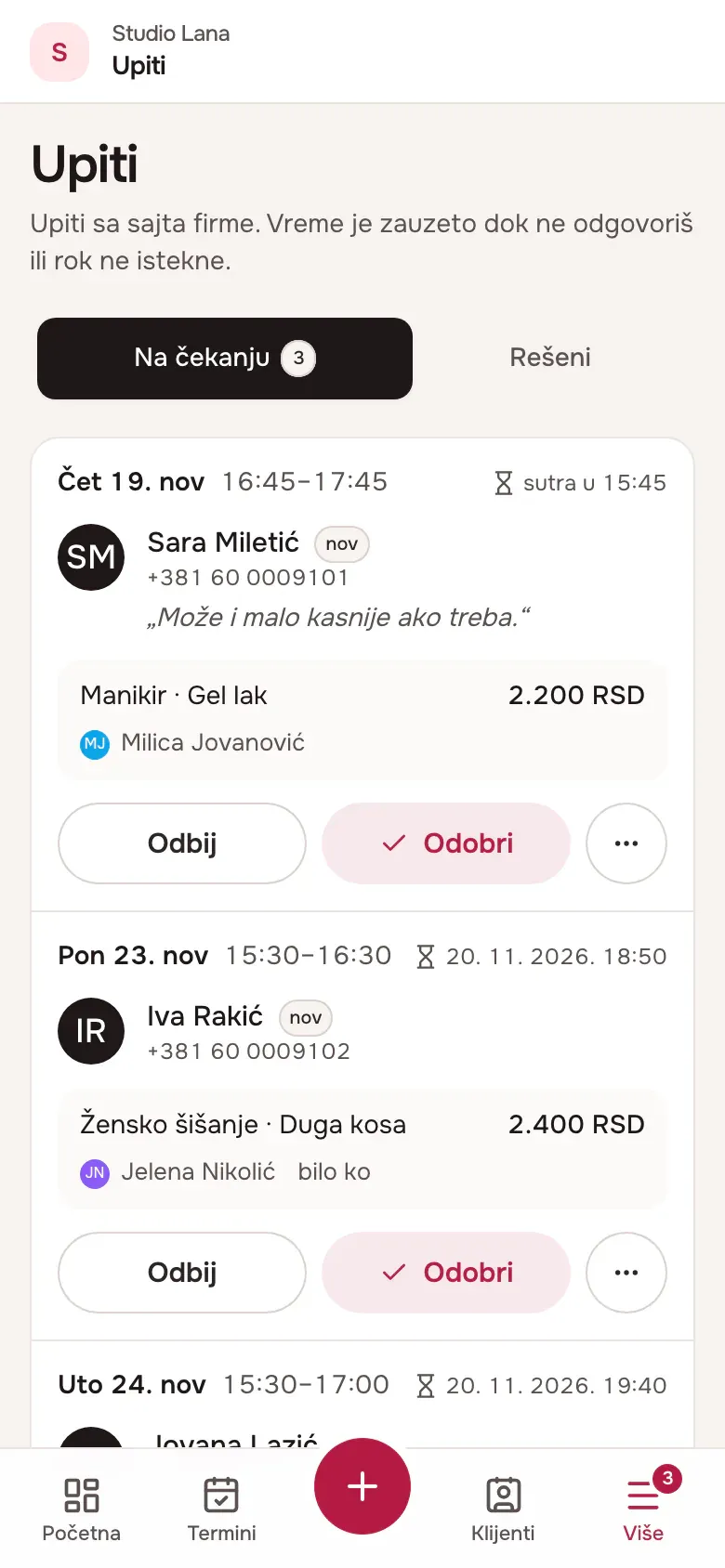
Requests come in from the company’s own website through the Rokó API and hold the slot until someone approves or declines them, or the reply deadline passes. The company sets the minimum notice, how far ahead clients can book, the slot step and the reply deadline.
Clients
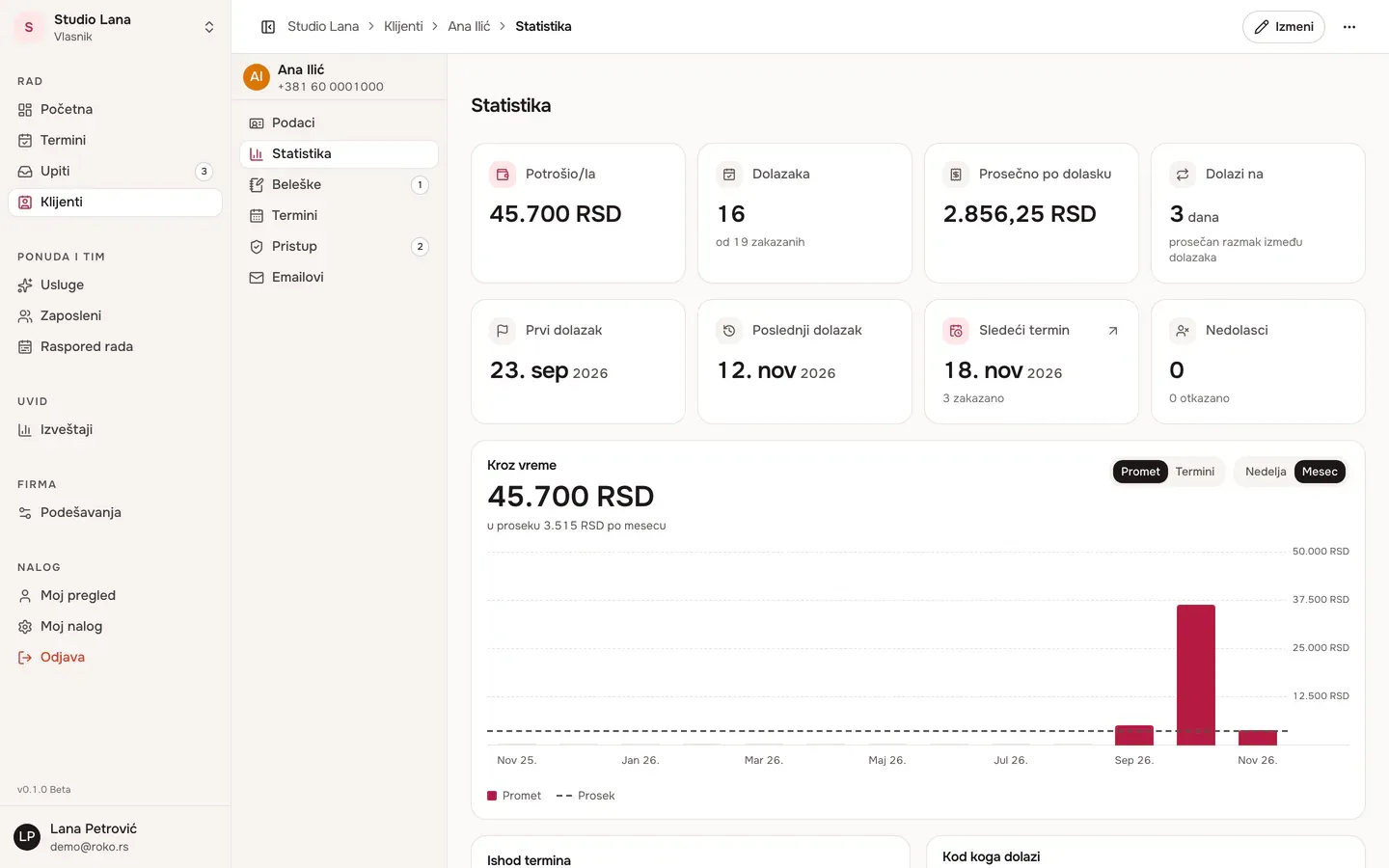
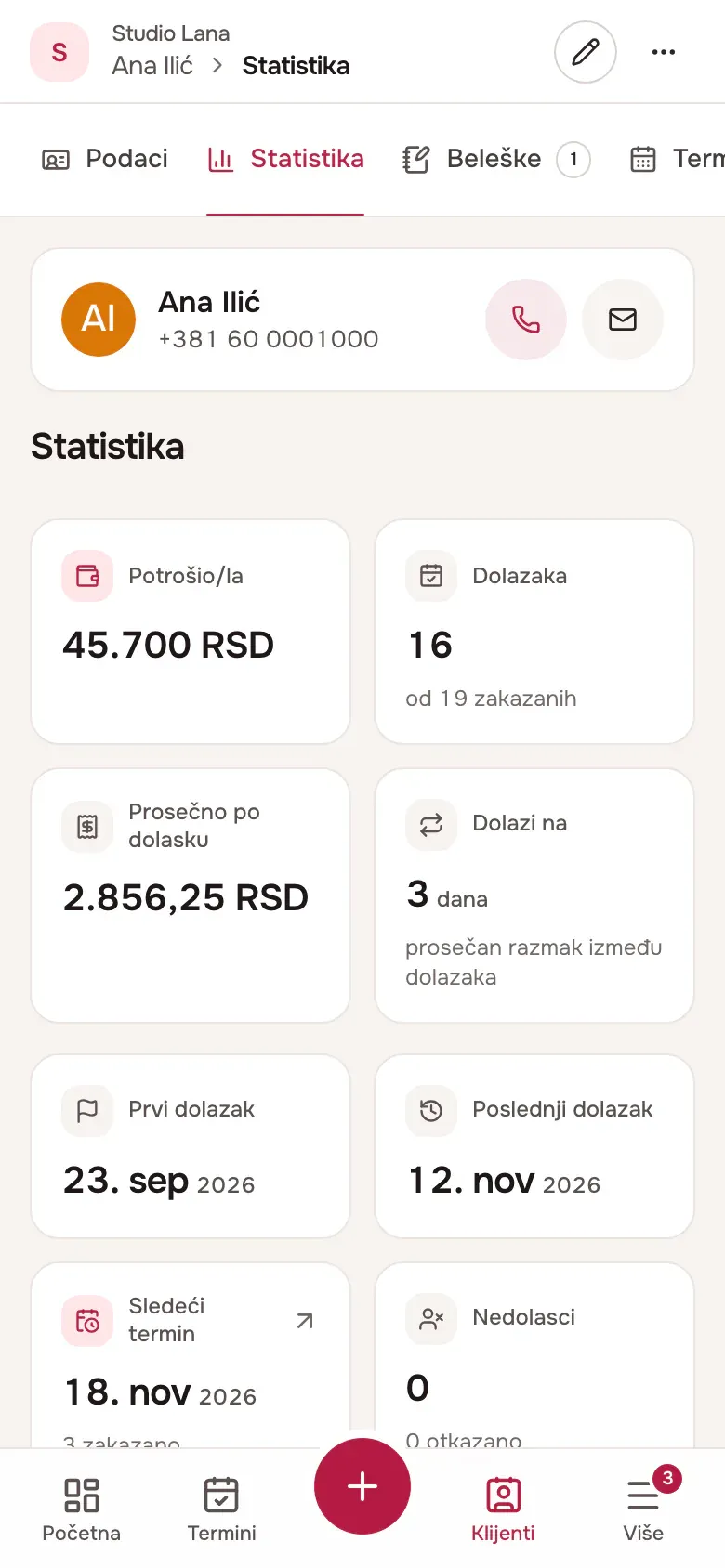
Each client has spend, visits, average per visit, return interval, next booking and no-shows on one screen. Notes, booking history and a log of access and sent emails sit next to them.
Services
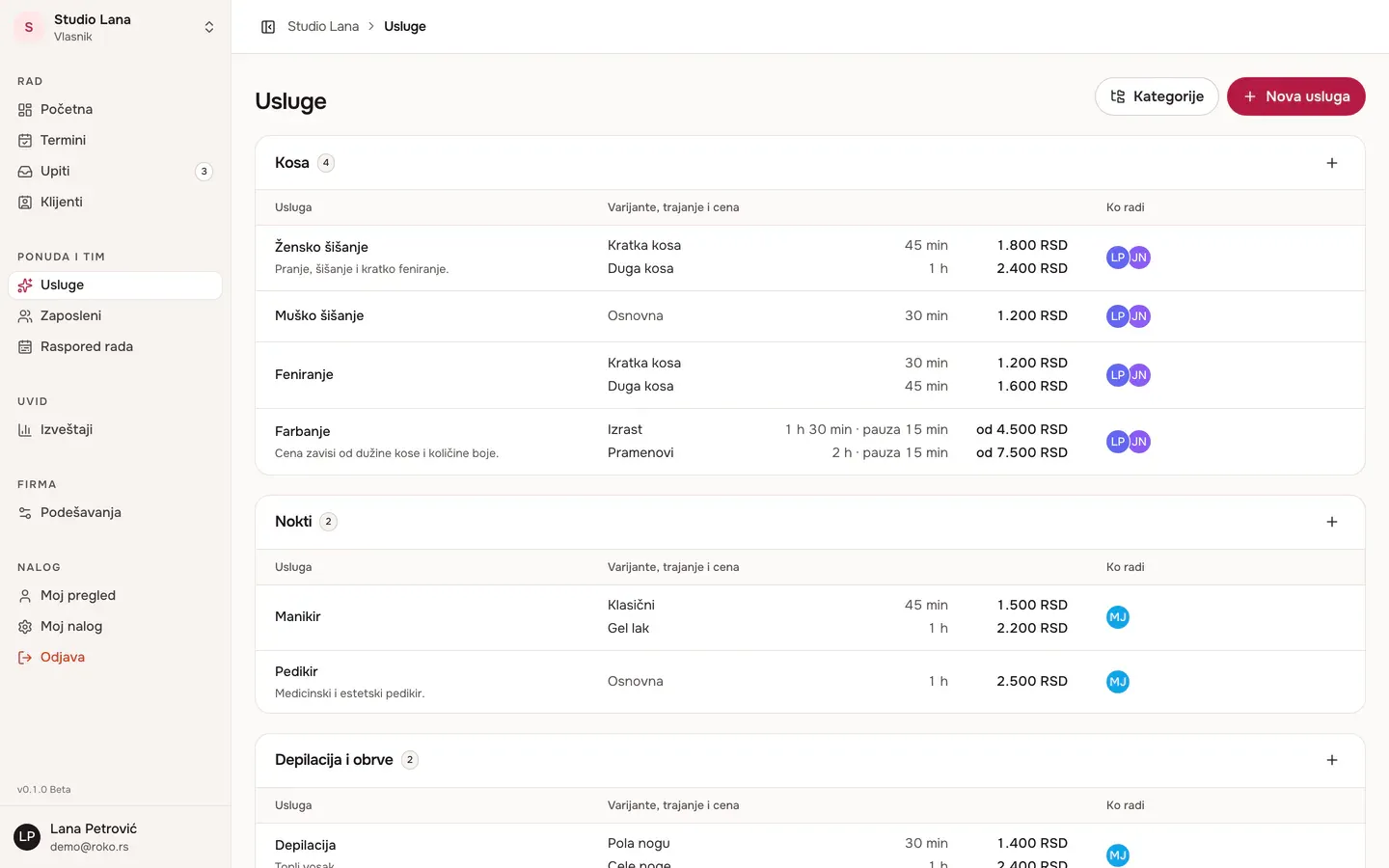
Services are grouped in categories and can have variants, each with its own duration, break after the service and price. Every service lists the staff who perform it.
Team
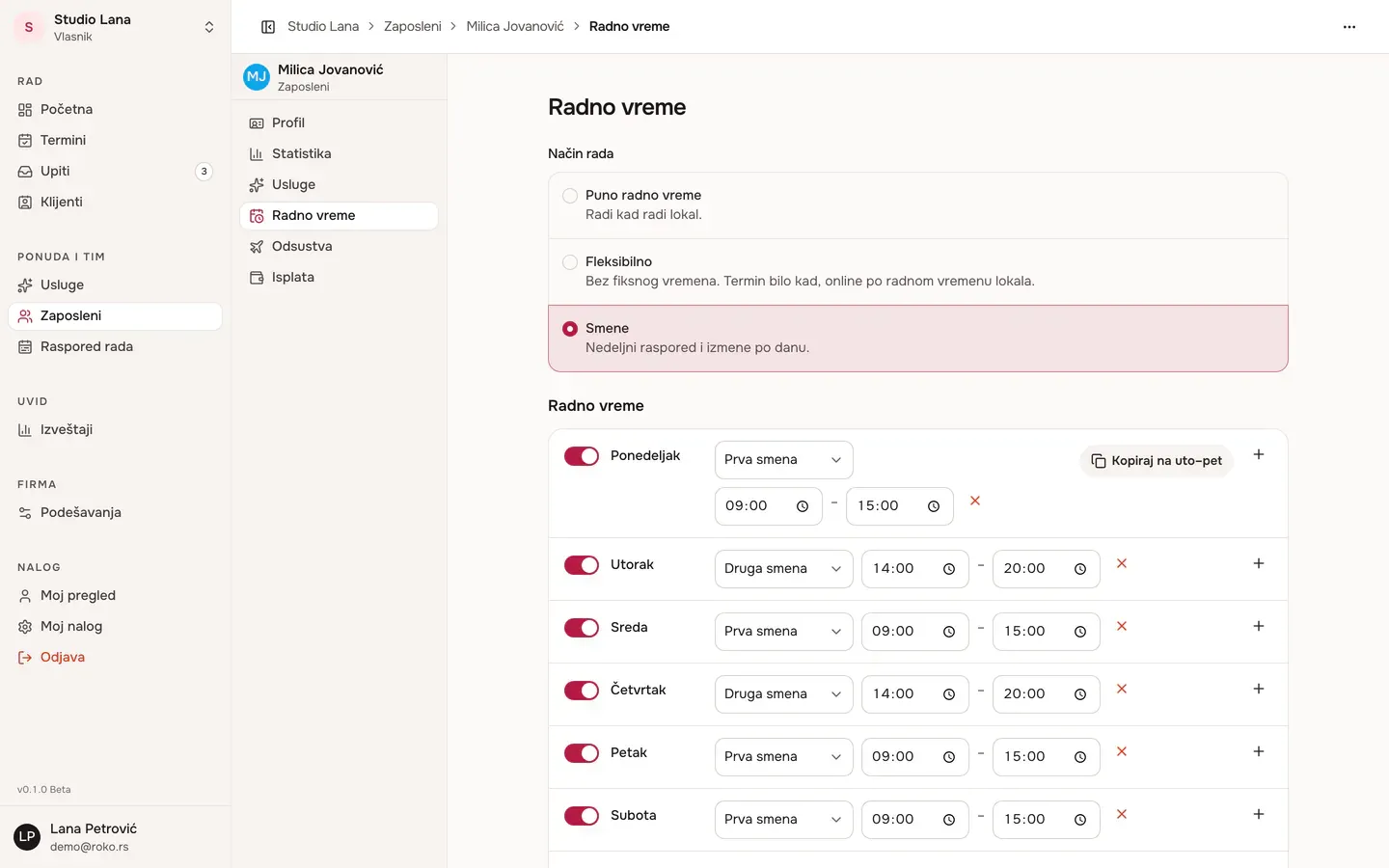
Staff profiles have owner, admin or employee roles and working hours as full time, flexible or shifts. A weekly shift schedule, time off and payout per staff member complete the picture.
Reports
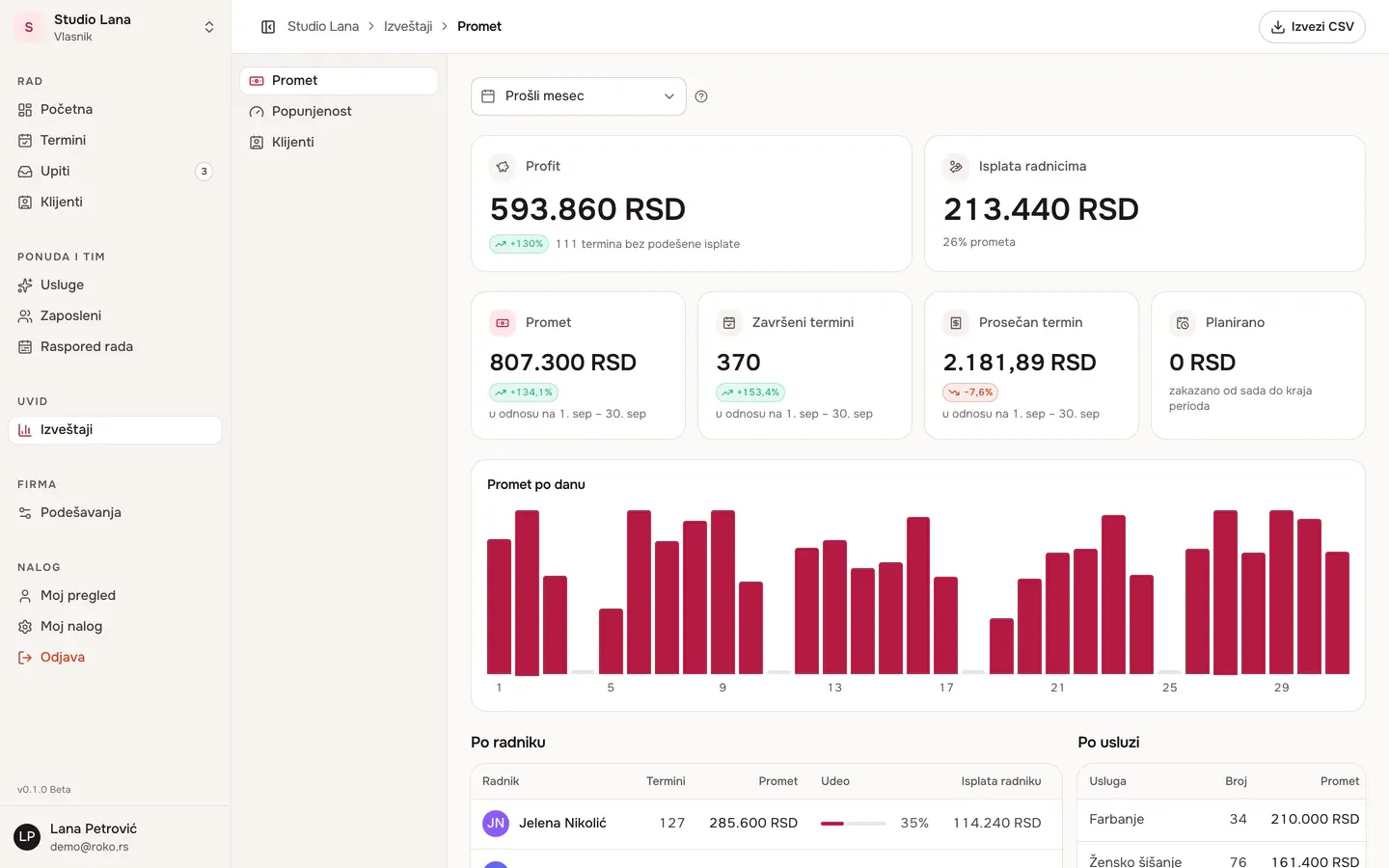
Reports show revenue, utilisation and clients compared with the previous period, with a CSV export.
Company & settings
Each company is set up with its locations and rooms, client emails and website booking settings, and the whole app works in Serbian and English. Support can enter an account only with the owner’s permission, and every access is logged.
More screens
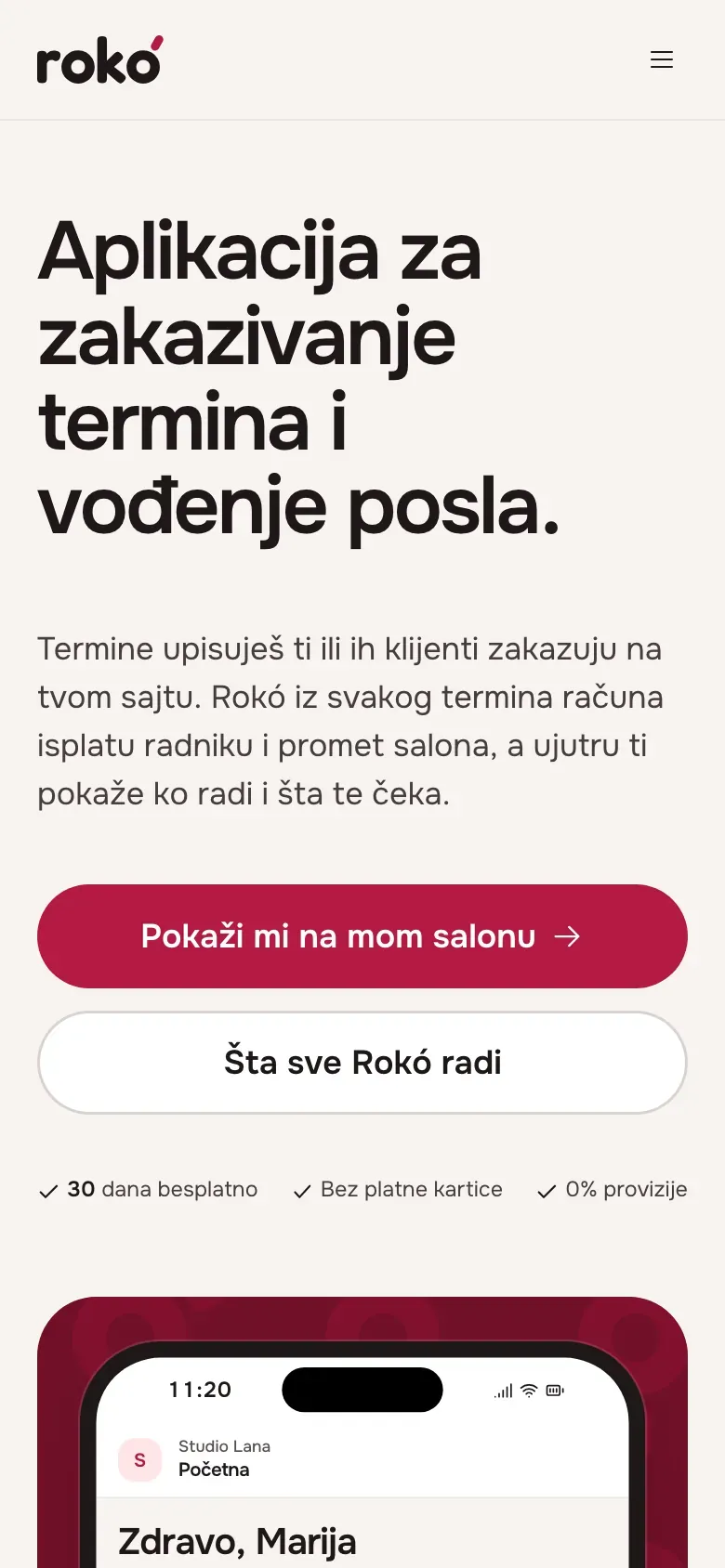
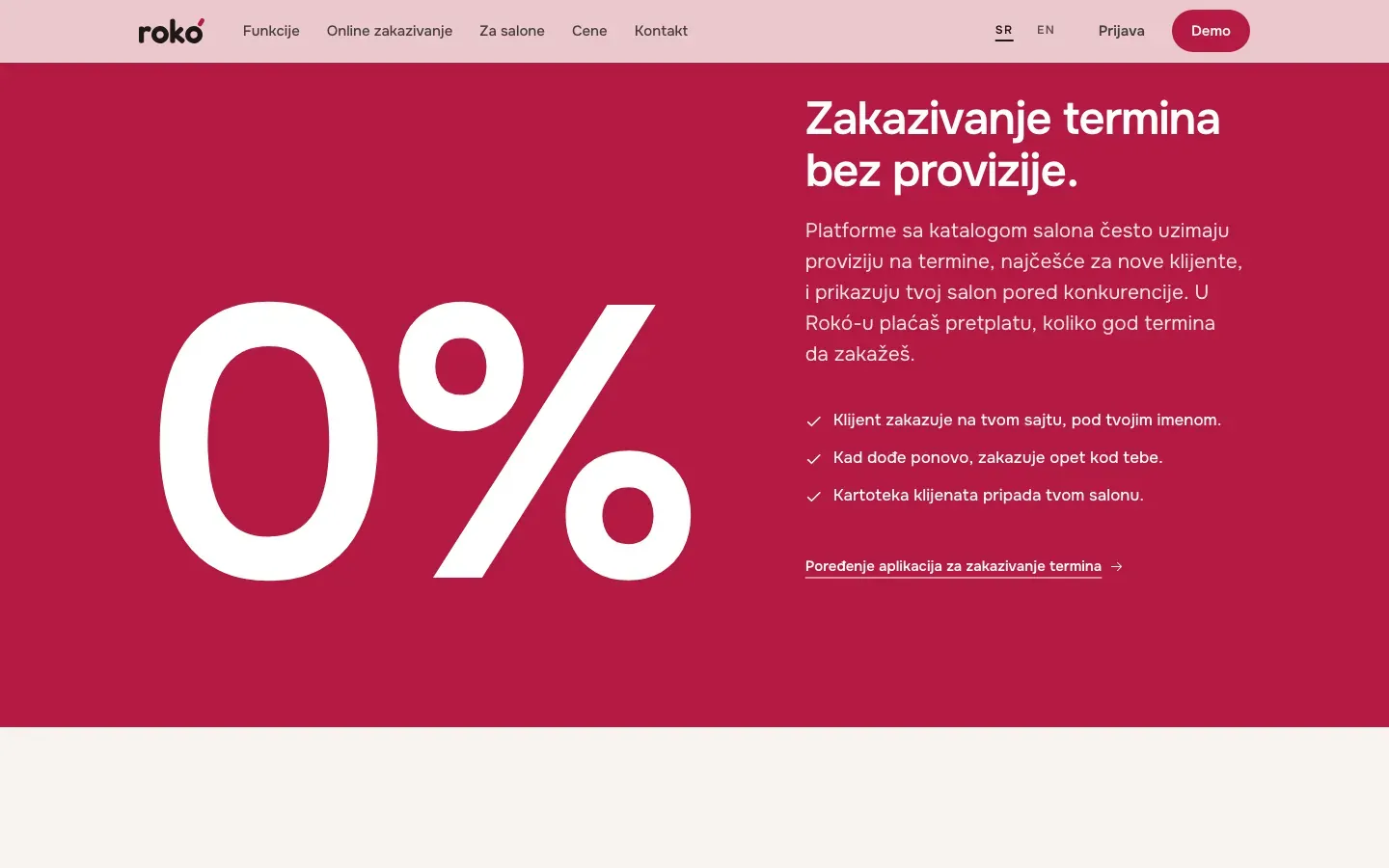
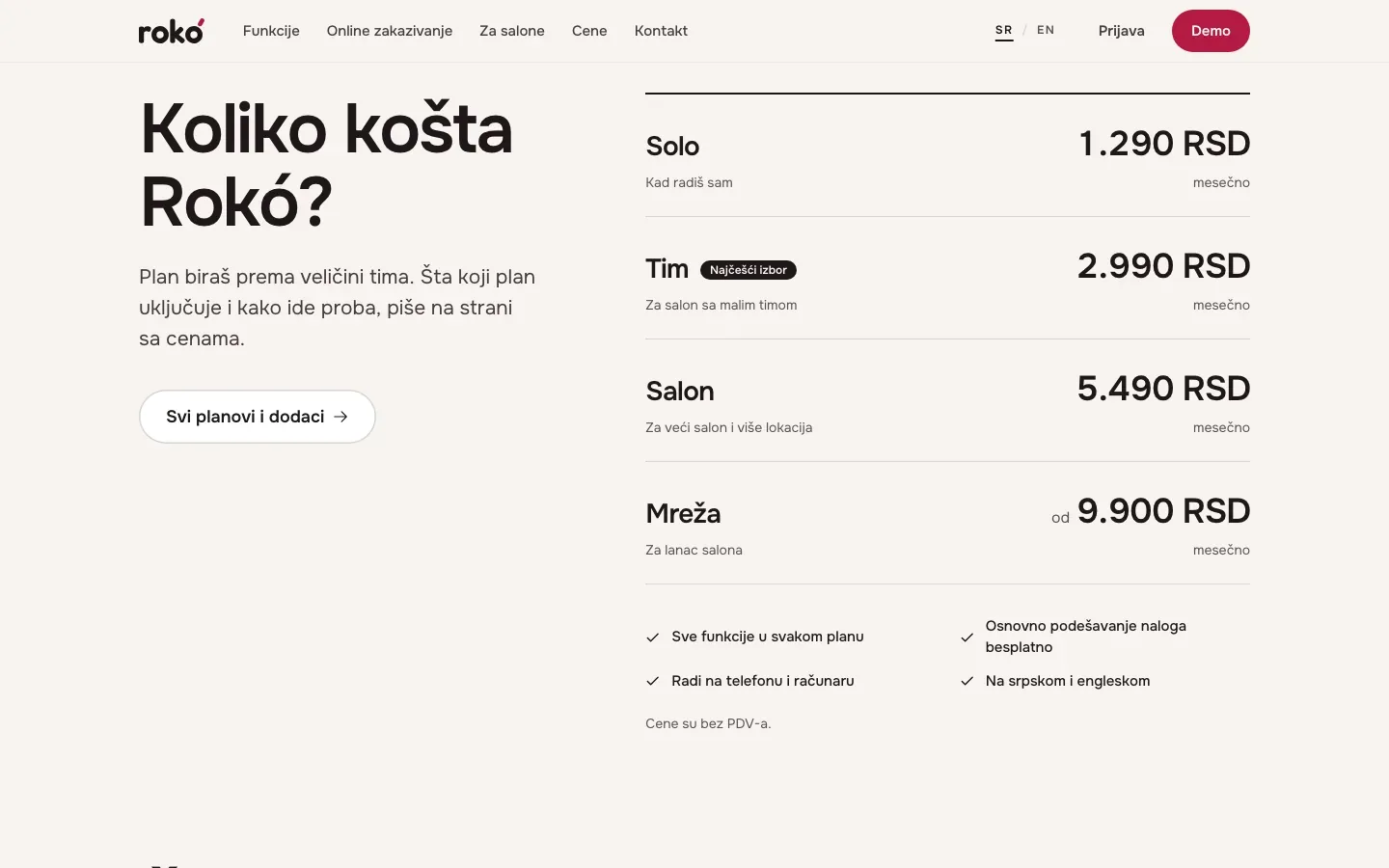
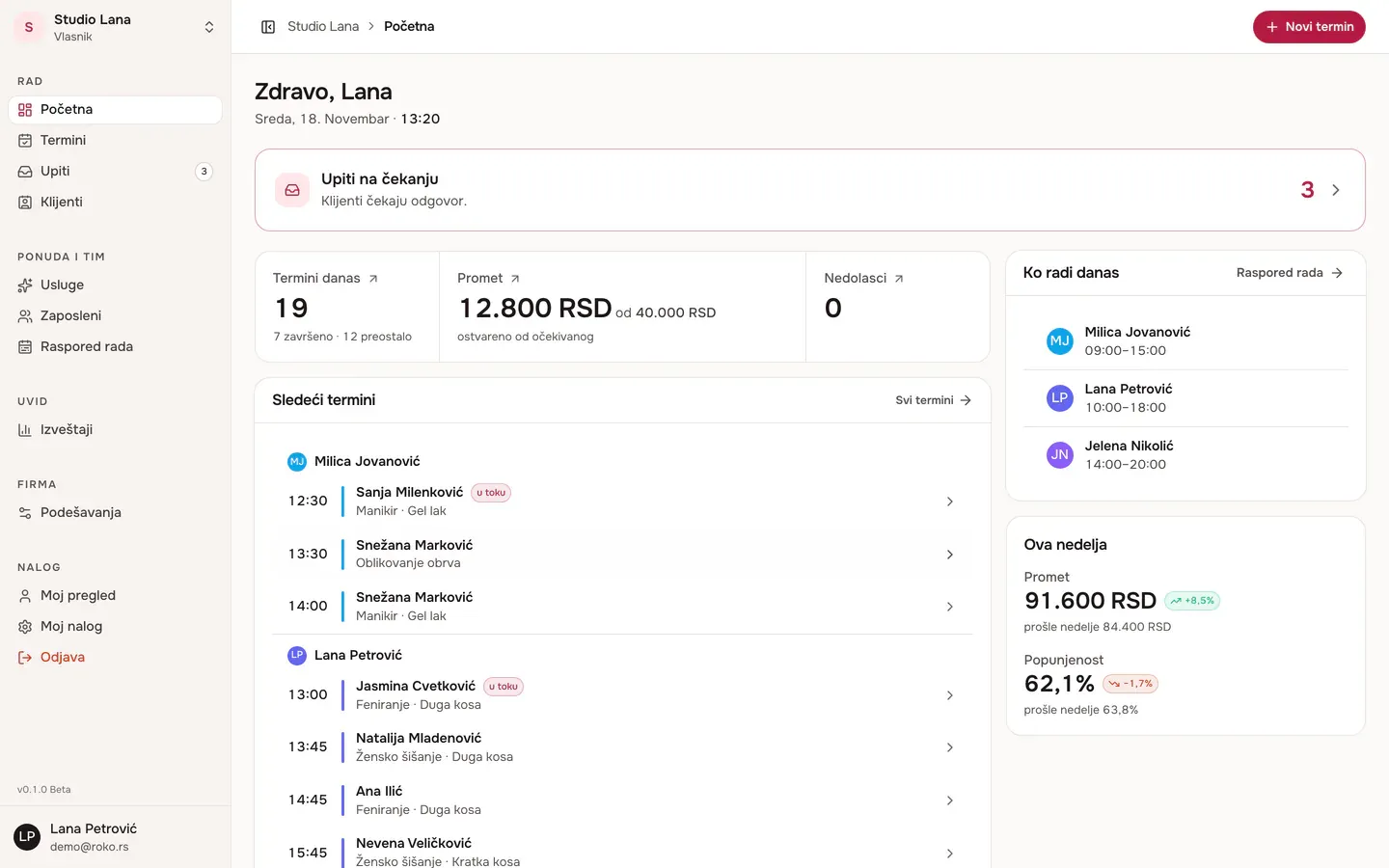
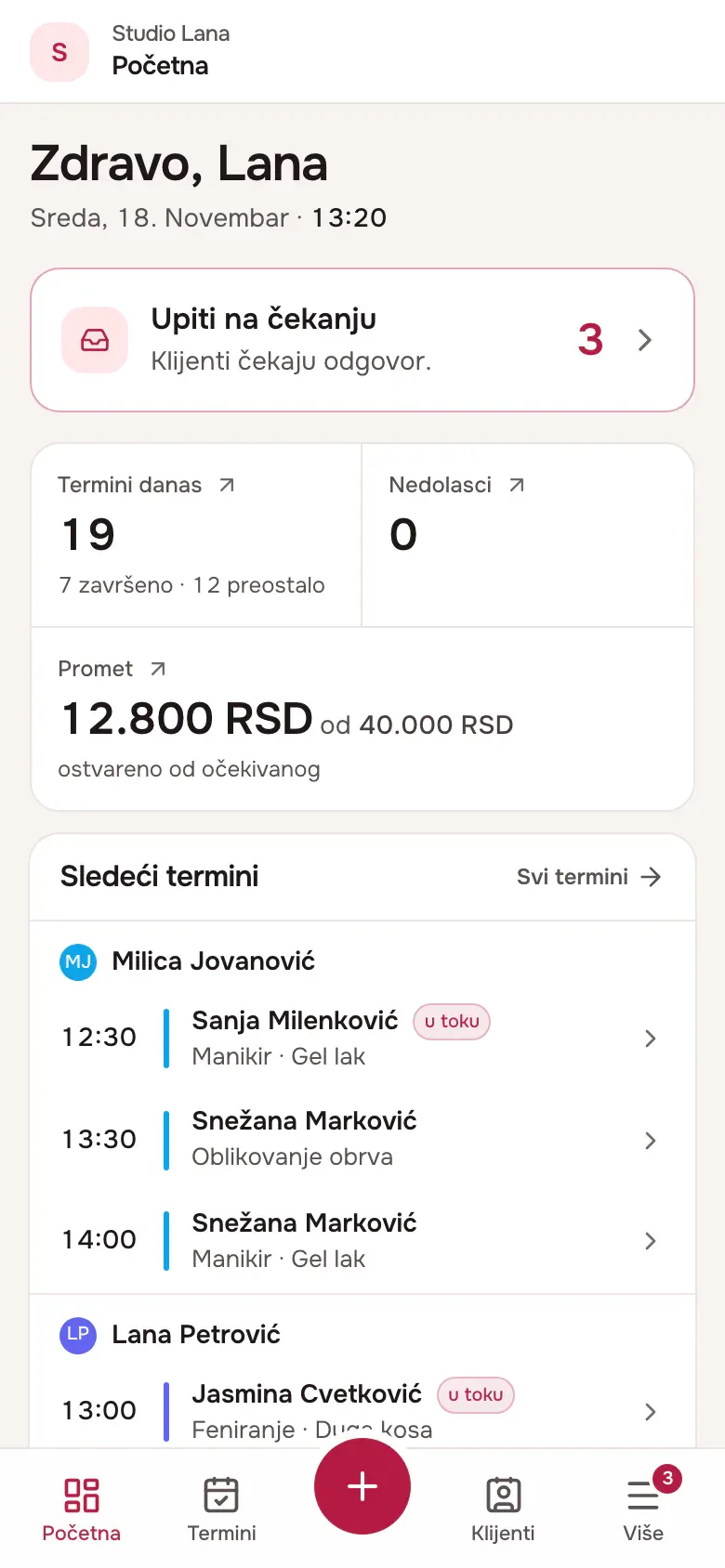
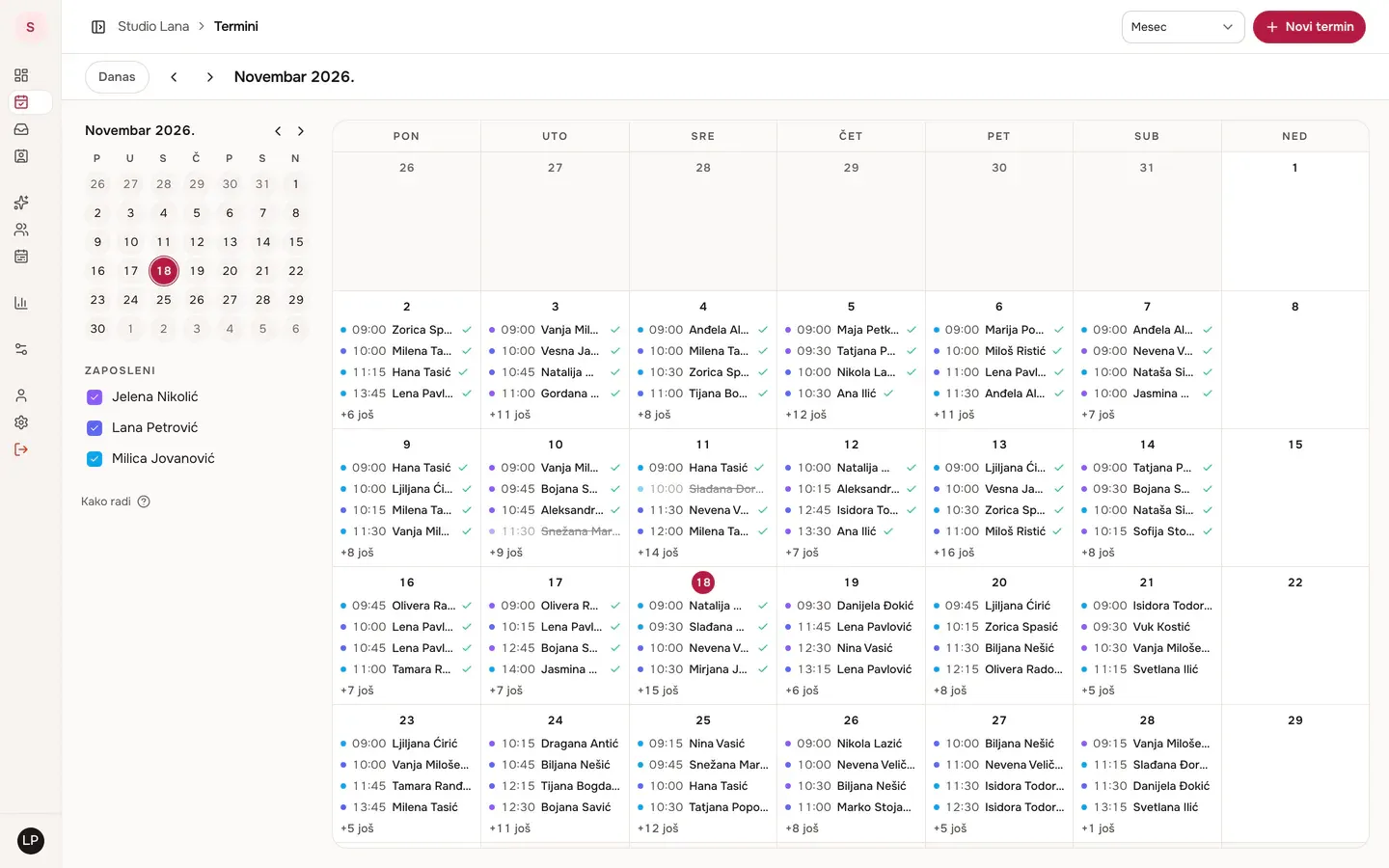
The brand.
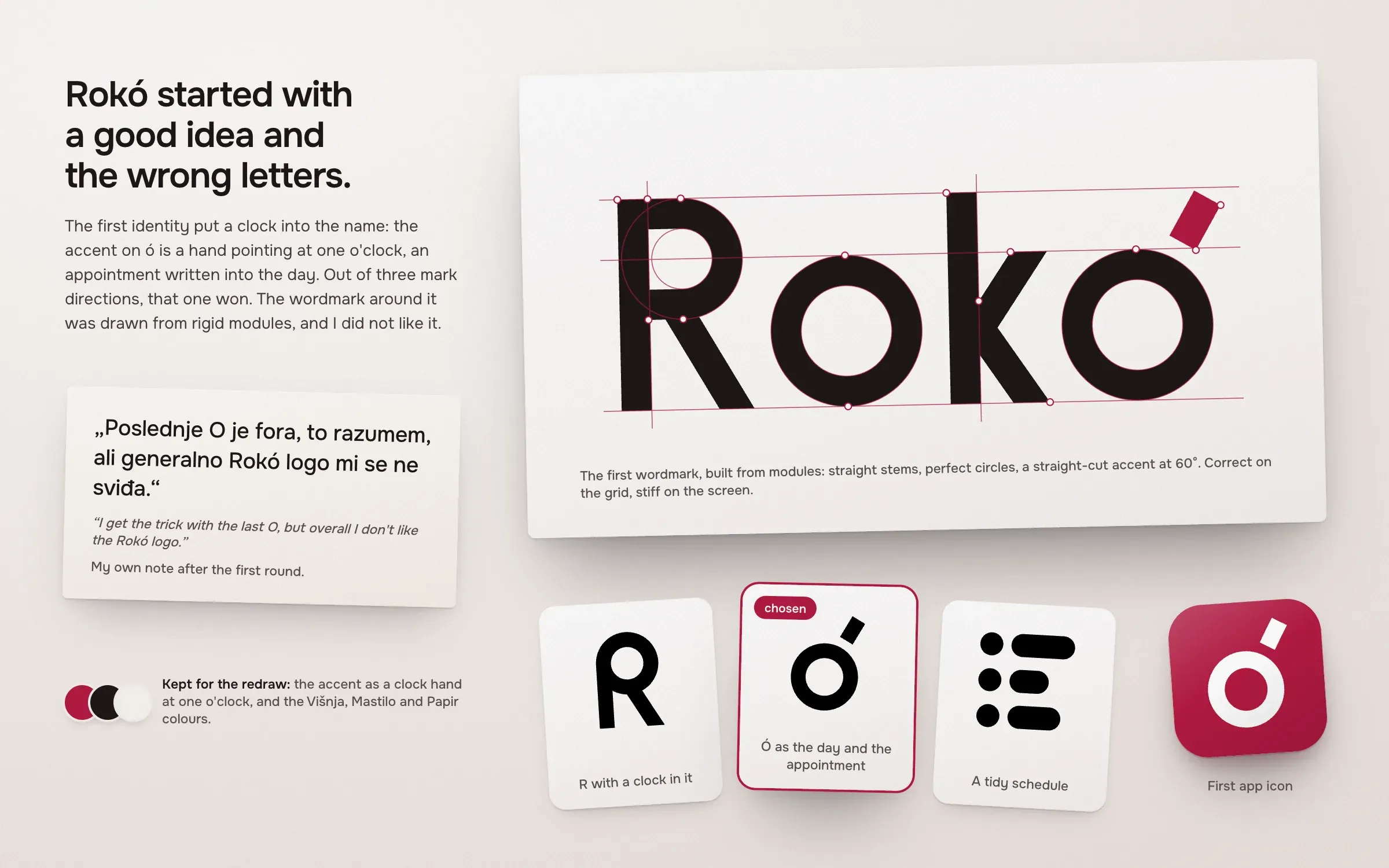
Rokó’s first identity put a clock into the name: the accent on the final ó is a hand pointing at one o’clock, an appointment written into the day. Of three mark directions, that idea won, but the wordmark around it was built from rigid modules and felt stiff, and I didn’t like it.
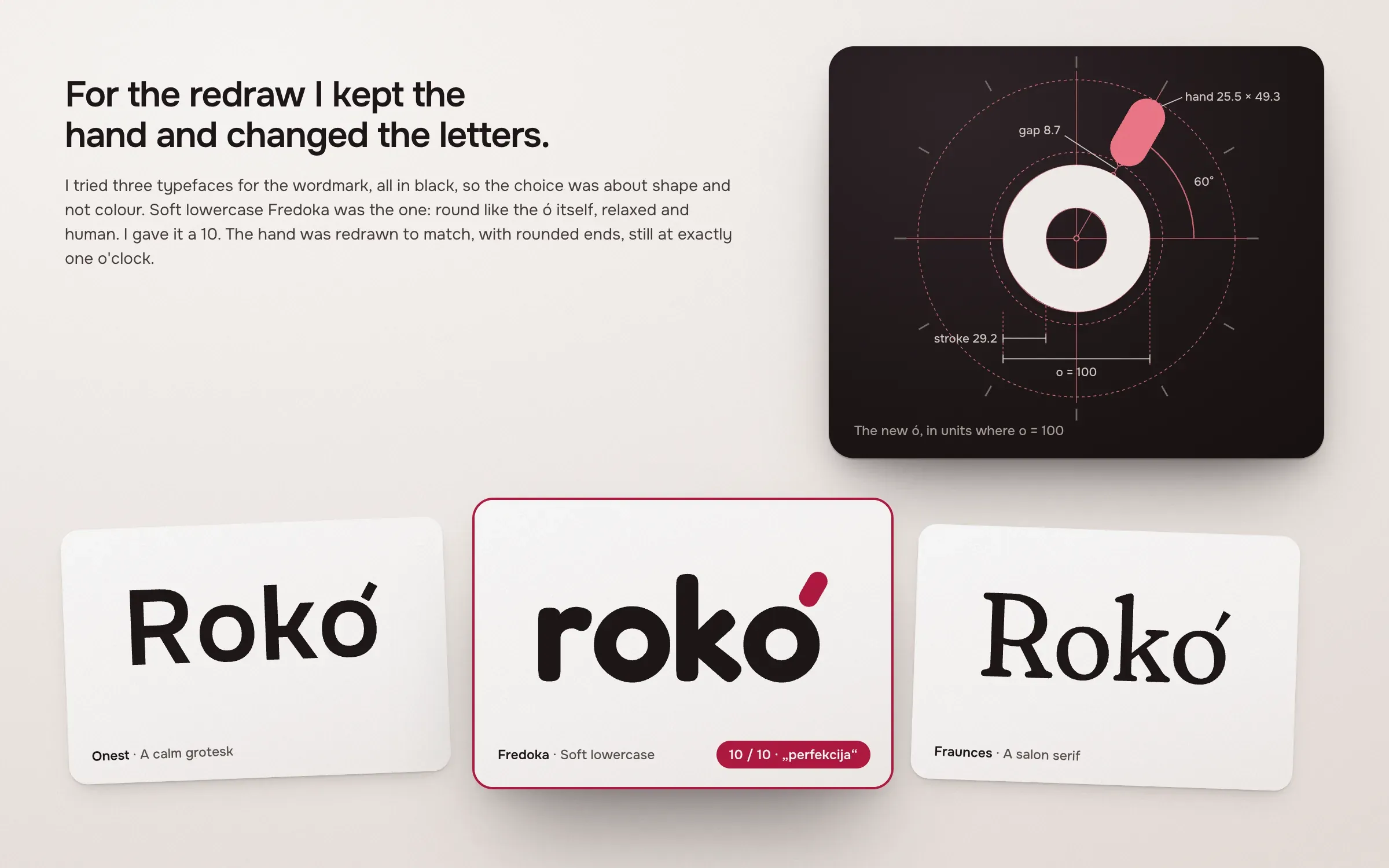
For the redraw I kept the hand, its angle and the palette, and tried three new typefaces in plain black so the choice would be about shape, not colour. Soft lowercase Fredoka was the clear winner: round like the ó itself, relaxed and human. The hand was redrawn to match, with rounded ends and still at exactly one o’clock.
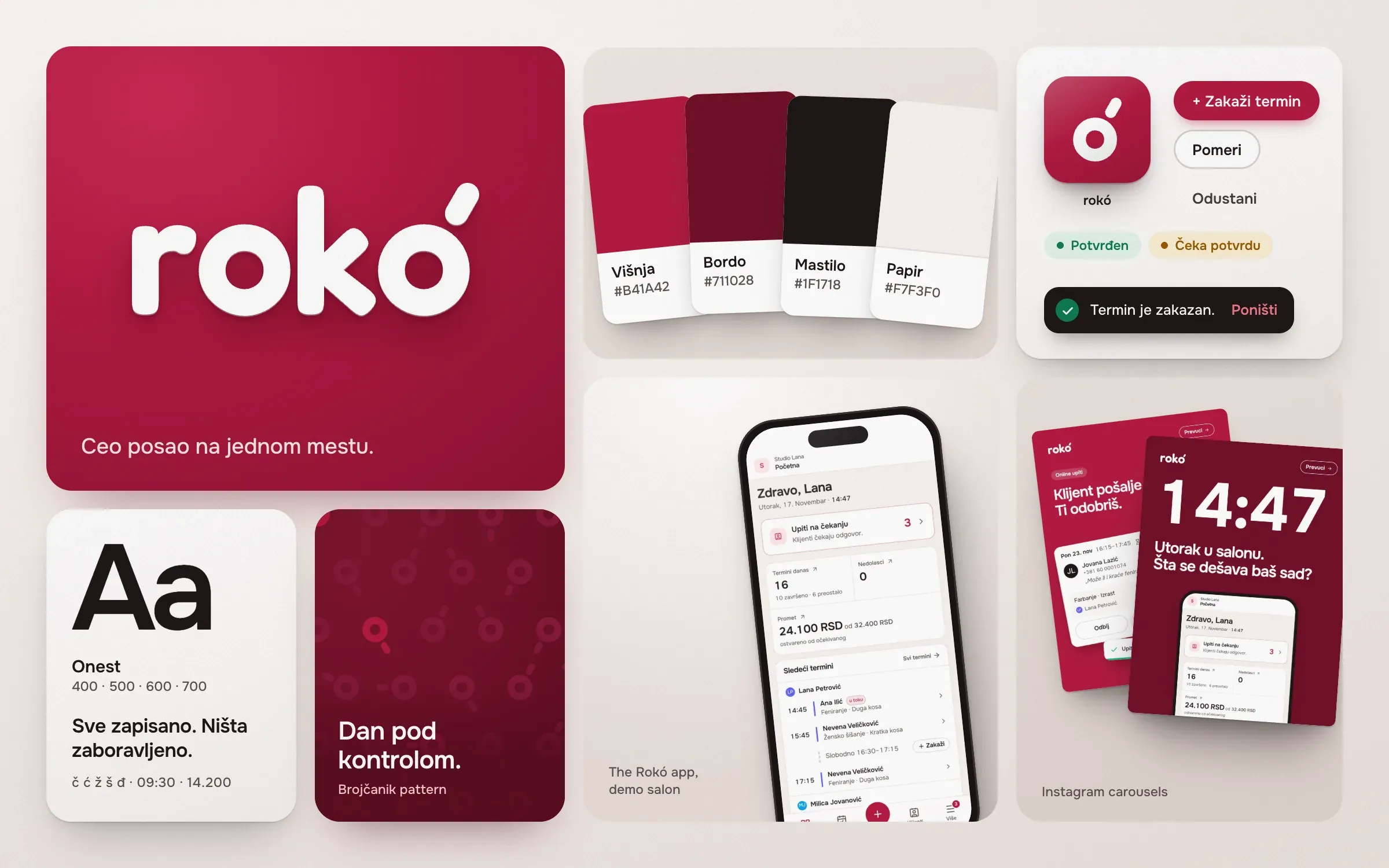
The rest of the system grew from that mark: Višnja as the single accent on Bordo, Mastilo and Papir, Onest for every word in the app, pill buttons, and the Brojčanik pattern, which walks the hand round the dial.